

Infrasound – Conversations Over Long Distances
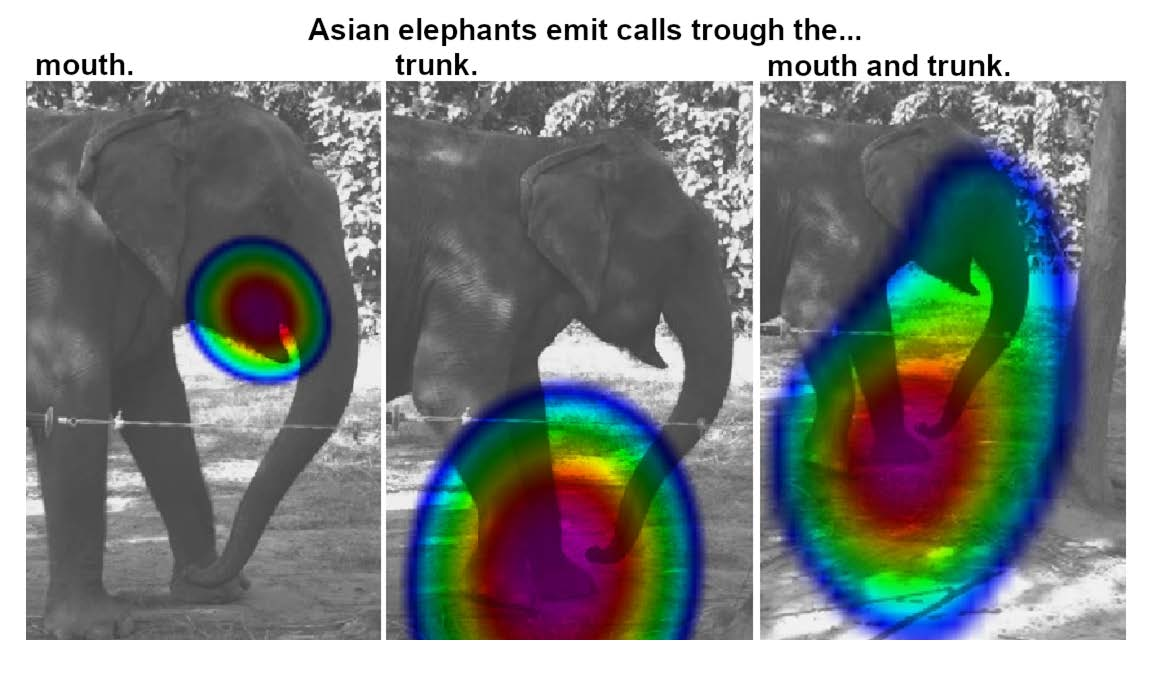
One of the most extraordinary ways elephants communicate is through infrasound—very low-frequency rumbles that are below the range of human hearing. These powerful calls can travel several kilometers through the air, allowing separated family members to stay in contact even when they cannot see one another. In some cases, the vibrations also travel through the ground, helping elephants detect distant messages.
Trunk Touches – A Language of Affection

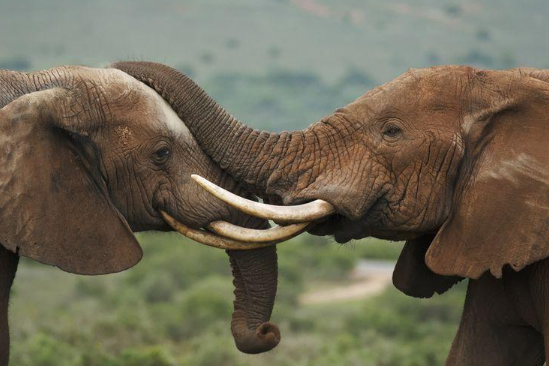
An elephant's trunk is far more than a tool for eating and drinking. Elephants gently touch each other's faces, mouths, trunks, and bodies to greet one another, comfort distressed family members, reassure calves, and reinforce social bonds. These gentle touches are an important part of daily life within the herd.
Body Language – Silent Messages

Elephants also communicate without making a sound. Ear position, trunk movements, head posture, and tail motion can all express excitement, curiosity, confidence, fear, or warning. During greetings, elephants often combine body movements with vocalizations and trunk touches, creating complex social interactions that researchers continue to study.
Chemical Signals – Information Through Scent

Elephants have an exceptional sense of smell. They use chemical signals found in urine, dung, gland secretions, and even body odors to recognize family members, identify reproductive status, and gather information about other elephants. By carefully smelling with their trunks, they can learn a great deal without making a sound.
Conclusion

Communication is at the heart of elephant society. Whether through deep rumbles, gentle trunk touches, expressive body language, or invisible scent signals, elephants maintain strong family relationships and work together to survive in the wild. Understanding these remarkable forms of communication reminds us how intelligent, emotional, and deeply connected these magnificent animals truly are.

