
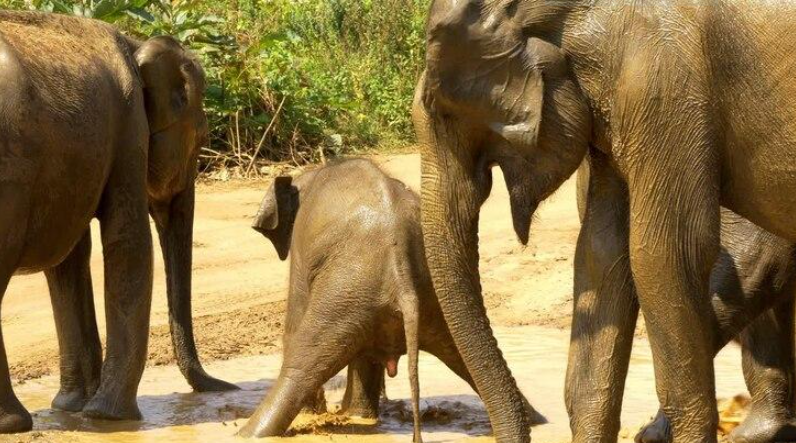
Elephant footprints are more than just tracks in the ground—they create tiny habitats that support life. During the rainy season, their large footprints collect water, providing valuable resources for many small plants and animals.
Rainwater Collection

Deep elephant footprints can hold rainwater for days or even weeks. These small pools become an important source of water, especially during dry periods.
A Home for Small Wildlife

Water-filled footprints provide temporary habitats for insects, frogs, and other tiny creatures. Some species even lay their eggs in these miniature ponds, where young animals can develop safely.
Helping Plants Grow

Elephant footprints trap soil, moisture, and seeds. These conditions create an ideal environment for seeds to germinate, allowing new plants to grow and increasing local biodiversity.
Conclusion

Every step an elephant takes can leave a lasting impact on nature. Their footprints may seem small, but they help create microhabitats that support countless forms of life, reminding us that even the simplest actions in nature can have extraordinary effects.