
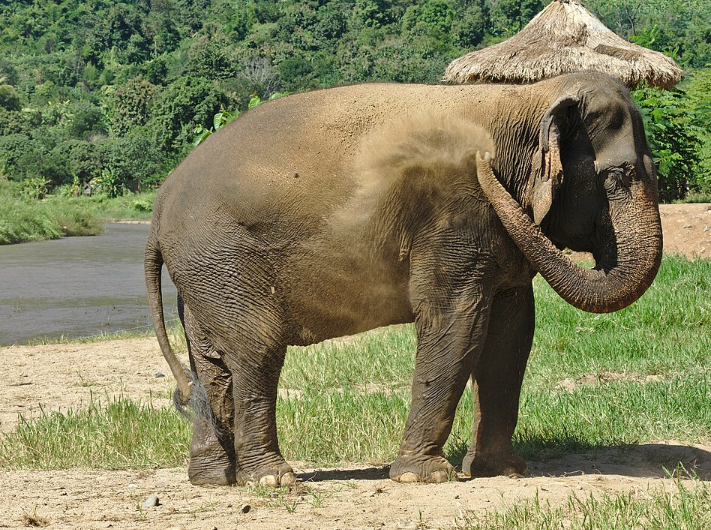
For elephants, a dust bath is far more than a daily habit—it is an essential part of staying healthy and comfortable. Across forests, grasslands, and open plains, wild elephants naturally cover themselves with layers of dry soil, creating a protective shield that supports both their physical well-being and their natural behavior.

At Elephant Rise, rescued elephants are free to enjoy this instinctive ritual whenever they choose. Whether after a refreshing swim or while wandering through open fields, they often pause to gather loose earth with their trunks before tossing it over their backs, sides, and heads. What may appear playful is, in fact, an important form of self-care.

A coating of fine dust helps protect an elephant's skin from the sun's intense rays. Acting as a natural sunscreen, it also reduces irritation caused by insects and creates a barrier against biting flies and other pests. Because elephants have sensitive skin despite its thickness, this simple behavior plays an important role in preventing discomfort throughout the day.

Dust bathing also works together with mud bathing to maintain healthy skin. After rolling in mud or cooling off in water, elephants often finish by applying a layer of dry soil. As the mud dries and falls away, it helps remove dead skin, while the dust absorbs excess moisture and leaves the skin clean and protected. This natural routine supports healthy skin without any human intervention.

For rescued elephants, these everyday behaviors are also signs of confidence and well-being. The freedom to dust bathe whenever they wish reflects an environment where they can express their natural instincts without chains, schedules, or forced work. Watching an elephant joyfully shower itself with dust is a reminder that true welfare means allowing wildlife to live according to its own needs.

Young elephants often learn this behavior by observing older members of the herd. As they imitate their mothers, aunts, and companions, dust bathing becomes part of a lifetime of shared knowledge passed from one generation to the next. These quiet moments strengthen social bonds while preserving behaviors that have supported elephants in the wild for thousands of years.

Dust bathing may seem like a simple daily routine, but it reflects the remarkable ways elephants care for themselves and one another. By protecting their skin, staying comfortable, and expressing natural behaviors, they demonstrate the importance of living in an environment that respects their instincts. Every handful of dust tossed into the air is a small yet powerful symbol of freedom, resilience, and the opportunity to thrive in the wild or in a sanctuary where their needs come first.
