
A significant change is beginning for elephants across Indonesia. Under the leadership of President Prabowo Subianto, the country has announced a nationwide ban on elephant riding, bringing an end to practices that have kept elephants carrying saddles and participating in performances.
The removal of riding equipment is an important first step. Yet lasting improvement will depend on what comes next: suitable land, careful planning, experienced care and long-term support for every elephant affected by the transition.

Elephants that have spent many years working cannot simply be released from their former routines without preparation. They need safe environments where their physical condition, individual histories and emotional needs can guide the pace of their recovery.
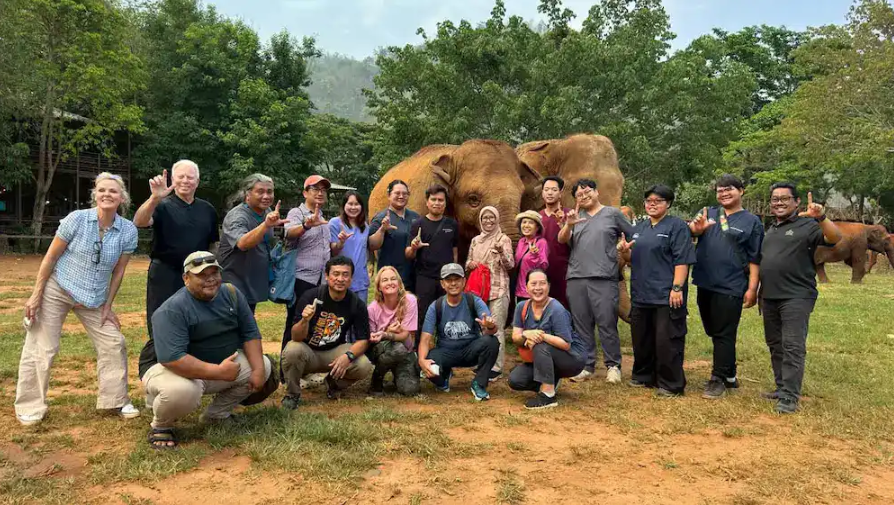
To help shape this process, representatives of the Indonesian government visited an established elephant sanctuary in Thailand. The delegation observed a care model centred on natural behaviour, respectful management and sanctuary-based welfare. The visit also offered practical insight for the conservation centres Indonesia plans to develop.

Following the visit, members of the sanctuary team were invited to Sumatra to assist with the next phase. Working with local authorities and conservation partners, they began assessing possible habitat locations and contributing to plans for spacious, chain-free environments.
These future sanctuaries are intended to provide retired elephants, especially Sumatran elephants, with room to move and receive appropriate care away from riding and performance activities. The aim is not merely to change how elephants are managed, but to create conditions that respect them as living, sensitive individuals.

The transition will take time. Some elephants remain in temporary settings while permanent habitats are prepared. After years—or even decades—of labour, each animal will need patience and steady support while adapting to a different daily life.
According to the announced plans, the first new habitat is expected to be completed by the end of 2026. Its development represents an urgent and necessary part of ensuring that the ban leads to meaningful improvements on the ground.
This progress has involved cooperation between government officials, elephant-welfare specialists and conservation organizations. Those acknowledged for supporting the initiative include President Prabowo Subianto; Forestry Minister Raja Juli Antoni; General Sriyanto; Karen Brooks; Ecoflix founder David Castleman; Femke den Haas of JAAN Indonesia; and other participating partners.

Indonesia’s decision offers a valuable reminder that ending exploitation is only one part of protecting elephants. Compassion must be followed by responsible action: secure habitats, professional care, collaboration and a willingness to place each elephant’s well-being at the centre of every decision.
At Elephant Rise, we welcome every genuine effort that allows elephants to live with greater choice, comfort and respect. The work ahead will be demanding, but each saddle removed, each chain-free space created and each thoughtful partnership brings elephants closer to the life they deserve.
