
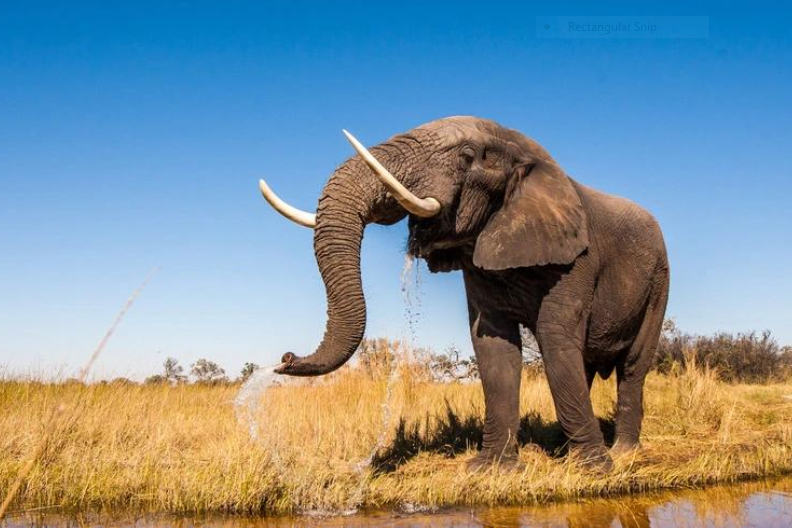

An elephant's tusks are among its most recognizable features, but they are much more than impressive ivory structures. In the wild, tusks serve as versatile tools that help elephants survive, find food, protect themselves, and interact with other members of their herd. Every day, elephants rely on their tusks in ways that are essential to their lives.
Digging for Water and Minerals

During dry seasons, elephants use their tusks to dig into dry riverbeds in search of underground water. They also excavate soil rich in minerals such as salt and calcium, which are important for maintaining healthy bones and overall body functions.
Finding Food

Tusks help elephants access food that would otherwise be difficult to reach. They strip bark from trees, break branches, dig up roots, and pull apart vegetation. These feeding habits allow elephants to take advantage of a wide variety of plants throughout the year.
Shaping Their Environment

As elephants push over small trees or remove branches, they create openings in forests and woodlands. These changes allow sunlight to reach the ground, encouraging new plant growth that benefits many other animals. In this way, elephants help shape the ecosystems where they live.
Protection and Competition

Tusks can also serve as defensive tools. While elephants generally avoid conflict, they may use their tusks to defend themselves or protect young calves from predators. Adult males sometimes spar with one another using their tusks when competing for mates or establishing dominance.
Everyday Tasks

Tusks are useful for many routine activities. Elephants may use them to move fallen logs, clear obstacles from their path, scratch hard-to-reach areas of their body, or support heavy branches while feeding. These everyday actions demonstrate how adaptable and practical tusks are.
Do All Elephants Have Tusks?
Not every elephant develops large tusks. Both male and female African savanna elephants usually have tusks, although the size varies between individuals. In Asian elephants, large tusks are most common in males, while many females have very small tusks, known as tushes, or none that are visible.
Some elephants are naturally born without tusks. This trait has become more common in certain populations where intense ivory poaching has favored tuskless individuals over many generations.
Why Tusks Matter
An elephant's tusks are more than symbols of strength. They are important tools that support feeding, movement, defense, and survival. Losing a tusk through injury can make some daily activities more difficult, although elephants often adapt remarkably well.
Unfortunately, tusks have also made elephants targets for illegal ivory trade, posing a serious threat to wild populations. Protecting elephants means ensuring they can continue using these remarkable tools as nature intended.
Elephant tusks represent millions of years of evolution, perfectly adapted to the challenges of life in the wild. Every mark, scratch, and worn edge tells the story of an animal using its natural tools to survive in a constantly changing environment.